The Complete Guide to ADHD Emotional Regulation and Resilience for Adults
Apr 03, 2026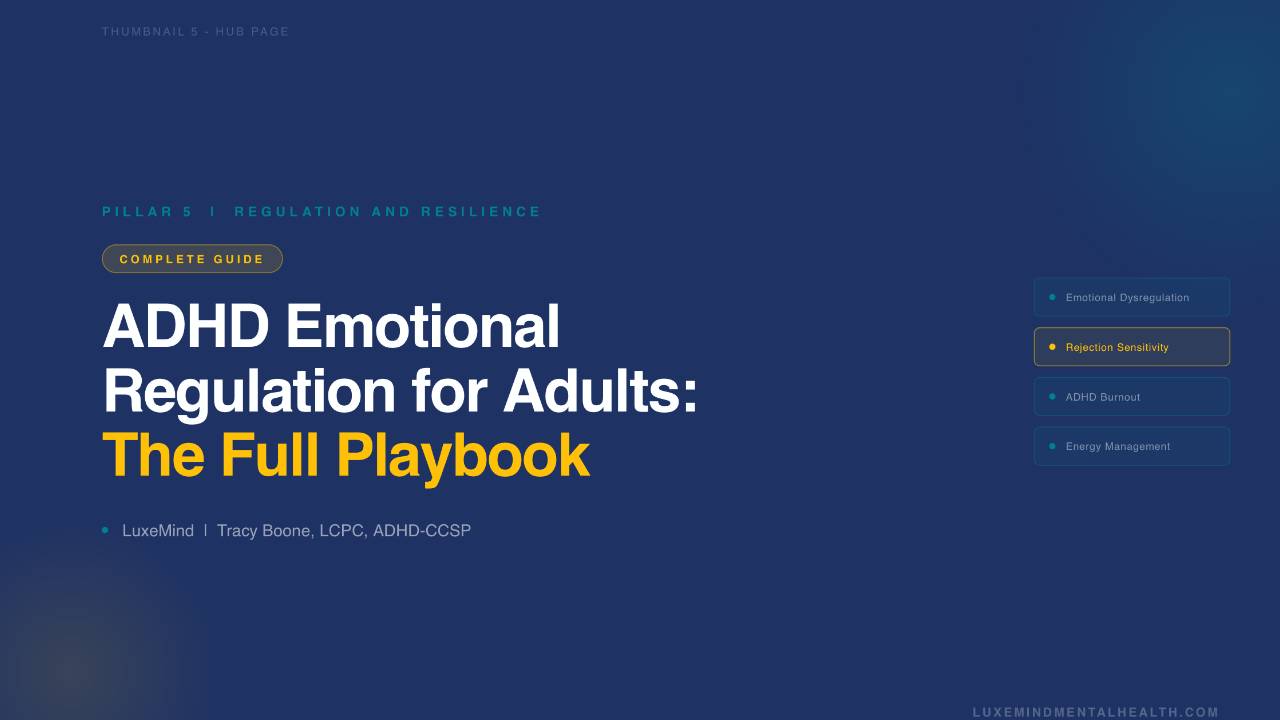
Of all the challenges that come with ADHD in adulthood, emotional regulation is the one that gets talked about least and affects daily life most.
The attention piece gets the headline. The time management piece gets the productivity advice. But it is the emotional piece that quietly shapes careers, relationships, self-image, and the capacity to keep going when things get hard.
This guide covers the four biggest emotional regulation and resilience challenges for ADHD adults and links to a deeper dive on each one.
Why Emotional Regulation Is a Core ADHD Challenge
Emotional dysregulation is not a side effect of ADHD. It is a direct result of the same neurological differences that affect attention and executive function. The prefrontal cortex, which regulates emotional responses, is the same region most affected by ADHD. When that system is inconsistent, emotions arrive faster, hit harder, and take longer to settle than they do for most people.
This is why ADHD adults so frequently describe feeling too much, reacting too strongly, and recovering too slowly from emotional experiences that other people seem to move through effortlessly. It is not a character issue. It is neurological architecture.
Understanding this distinction is the foundation of everything else in this pillar. You are not broken or out of control. You are running a nervous system with specific characteristics, and there are specific tools that work with those characteristics rather than against them.
Emotional Dysregulation: The Full Picture
Emotional dysregulation in ADHD adults encompasses more than occasional overreaction. It includes the speed of emotional response, the intensity of the experience, the difficulty in down-regulating once activated, and the impact that emotional states have on executive function and daily functioning.
When you are in a heightened emotional state, executive function degrades. Task initiation gets harder. Focus disappears. Decision making deteriorates. The emotional and cognitive systems are deeply interconnected, which means emotional regulation is not just about managing feelings. It is about maintaining the neurological conditions needed to function.
Read the full post on ADHD emotional dysregulation and why it hits so hard: https://adhd.luxemindmentalhealth.com/blog/adhd-emotional-dysregulation-adults
Rejection Sensitive Dysphoria: The Hidden Driver
Underneath a lot of ADHD emotional experience is rejection sensitive dysphoria, an intense, immediate response to perceived criticism, rejection, or failure that affects nearly every adult with ADHD to some degree.
RSD shapes behavior in ways that are often invisible even to the person experiencing it. Perfectionism, people pleasing, social withdrawal, and volatility in close relationships can all trace back to the nervous system's attempt to protect itself from the pain of perceived rejection. Understanding RSD changes how you interpret your own behavior and gives you tools that actually address the root cause rather than the symptoms.
Read the full post on rejection sensitive dysphoria and ADHD: https://adhd.luxemindmentalhealth.com/blog/rejection-sensitive-dysphoria-adhd-adults
ADHD Burnout: When the System Finally Gives Out
ADHD burnout is what happens when years of compensating, masking, and overextending the neurological system reach their limit. It is not a bad week. It is a complete depletion of the capacity to manage ADHD that has been building for months or years.
ADHD burnout is different from regular burnout in its causes, its presentation, and what genuine recovery requires. Understanding those differences is essential for anyone who has hit the wall, or who wants to build a life sustainable enough to avoid hitting it.
Read the full post on ADHD burnout and how to recover: https://adhd.luxemindmentalhealth.com/blog/adhd-burnout-recovery-adults
Energy Management: Building a Day Your Nervous System Can Sustain
ADHD adults expend significantly more energy than neurotypical adults on the same daily demands. Managing executive function, regulating emotions, processing sensory input, and maintaining performance in environments not designed for ADHD brains all draw from a battery that starts smaller and drains faster.
Energy management for ADHD adults is not about motivation or discipline. It is about designing your days around your actual neurological capacity, protecting your high-energy windows, building in genuine recovery, and reducing the unnecessary demands that deplete your system before you even get to the work that matters.
Read the full post on ADHD energy management and why your battery drains faster: https://adhd.luxemindmentalhealth.com/blog/adhd-energy-management-adults
The Bigger Picture
Emotional regulation and resilience are not soft skills. They are the infrastructure that everything else in your life runs on. When your nervous system is chronically overwhelmed, nothing else works well. When you have tools to regulate, recover, and build genuine resilience, every other area of ADHD management gets easier.
This is why Regulation and Resilience is one of the six foundational pillars of the LuxeMind coaching system. Not because emotions are the problem, but because the nervous system is the foundation.
The Regulation and Resilience Trail Guide gives you a complete, practical workbook for understanding and working with your ADHD emotional system. Built for the nervous system you actually have, ready to use the day you open it.
Ready to build systems that actually work for your ADHD brain? The LuxeMind Trail Guides give you practical tools you can use the day you open them.
Get ADHD tools and strategies delivered to your inbox.
We hate SPAM. We will never sell your information, for any reason.